

Why Does My Dishwasher Smell Bad?
You open your dishwasher expecting clean dishes, but instead you’re greeted by an unpleasant odor. Sometimes it smells musty. Other times it smells like sewage, rotten eggs, or stale food.
If that sounds familiar, you’re not alone.
Here is the short answer:
A dishwasher usually smells bad because food debris, grease, standing water, mold, mildew, or bacteria have accumulated somewhere inside the appliance. Common trouble spots include the dishwasher filter, drain hose, spray arms, door gasket, and drainage system. In some cases, plumbing or garbage disposal connections can also contribute to unpleasant odors.
The good news is that most dishwasher odors can be traced back to a specific cause and addressed before they become a bigger problem.
Let’s look at the most common reasons your dishwasher smells bad and what you can do to eliminate the odor.
Why Does My Dishwasher Smell Like Sewage or Rotten Eggs?
A dishwasher should never produce strong foul odors during normal operation.
When unpleasant smells develop, they often indicate that moisture, food particles, and bacteria have found a place to accumulate.
Many homeowners assume the dishwasher itself is failing. In reality, the smell often comes from organic material trapped somewhere inside the appliance.
The challenge is that several different issues can produce very similar odors.
A rotten egg smell may suggest bacterial growth.
A sewage smell could point toward drainage issues.
A musty odor often indicates mold or mildew.
Finding the source is the first step toward solving the problem.
Food Debris Trapped in the Dishwasher Filter
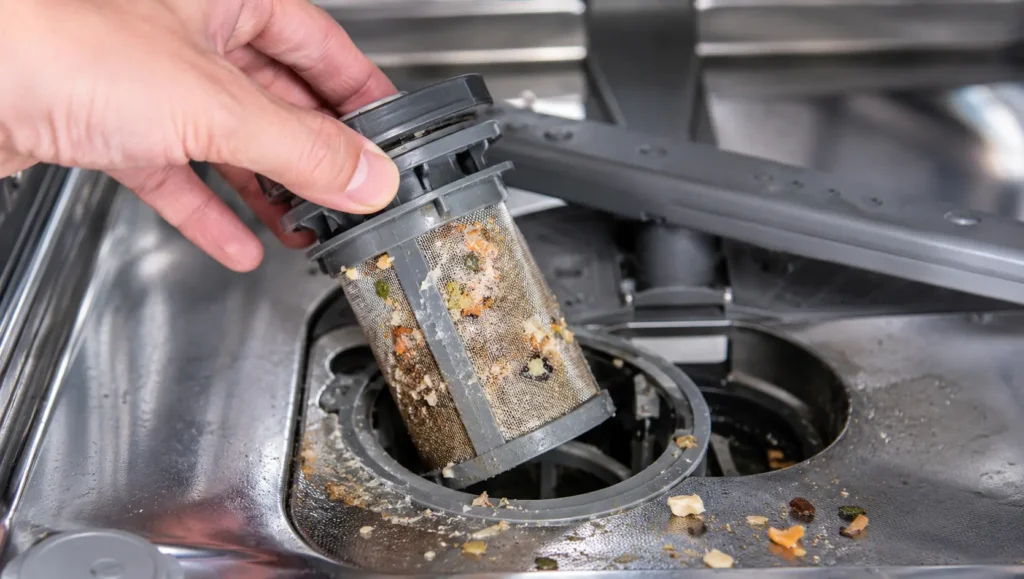
One of the most common causes of dishwasher odor is a dirty filter.
Modern dishwashers contain filters designed to catch food particles before they enter the drainage system. Over time, these particles can accumulate and begin decomposing.
As food breaks down, bacteria multiply and unpleasant smells develop.
Common signs of a dirty dishwasher filter include:
- unpleasant odors after each cycle
- cloudy dishes
- poor cleaning performance
- visible debris inside the filter housing
Many homeowners are surprised to discover how much food can become trapped inside the filter over just a few weeks.
Regular filter cleaning is one of the simplest ways to prevent dishwasher odors.
Standing Water Inside the Dishwasher
Water should drain completely at the end of every cycle.
When water remains inside the tub, bacteria and food particles can accumulate quickly.
This often creates:
- musty smells
- mildew odors
- sewage-like odors
- stagnant water smells
Standing water may indicate a developing drainage issue.
If you notice water pooling at the bottom of the dishwasher after a cycle, it could be related to the same types of problems discussed in our guide on dishwasher not draining properly.
The longer water remains trapped inside the appliance, the greater the chance odors will develop.
Mold and Mildew Growth Inside the Dishwasher
Dishwashers operate in a warm and damp environment.
Unfortunately, those conditions also create an ideal environment for mold and mildew growth.
Areas commonly affected include:
- door gaskets
- corners of the tub
- spray arm openings
- filter compartments
- hidden crevices around the door
Mold growth may appear as dark spots, discoloration, or slimy residue.
Even when mold is not visible, it can still produce strong musty odors.
This is especially common when the dishwasher remains closed for extended periods between cycles.
A Clogged Drain Hose Can Create Unpleasant Odors
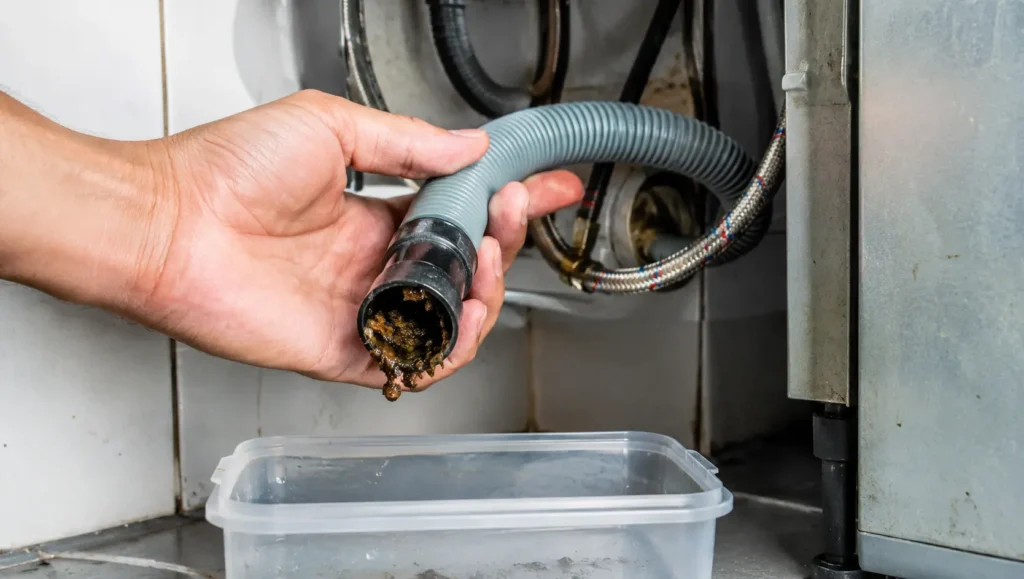
The drain hose plays an important role in removing dirty water from the dishwasher.
When the hose becomes partially clogged, food particles and wastewater can remain trapped inside.
Over time, this material begins decomposing.
The result is often an odor that resembles sewage or rotten food.
Drain hose problems may also contribute to slow drainage and standing water inside the appliance.
Because these symptoms are connected, odor issues sometimes appear before drainage problems become obvious.
Garbage Disposal Connection Problems
Many dishwashers share a connection with the kitchen garbage disposal.
If food waste accumulates inside the disposal, odors can travel back through the drainage system and enter the dishwasher.
This is particularly common when:
- the disposal has not been cleaned recently
- food waste remains trapped inside
- the dishwasher drain connection is affected
Homeowners often assume the dishwasher is causing the smell when the actual source is the disposal system connected to it.
Cleaning both appliances can sometimes resolve the issue immediately.
Dirty Spray Arms Can Hold Hidden Food Particles
Spray arms are responsible for distributing water throughout the dishwasher during each cycle.
Over time, food particles, grease, and mineral deposits can accumulate inside the small spray arm openings.
When this happens:
- water circulation decreases
- cleaning performance suffers
- odors become more noticeable
Removing and cleaning spray arms periodically helps maintain both cleaning efficiency and odor control.
This is one of the most overlooked maintenance tasks performed by homeowners.
How to Get Rid of Dishwasher Odors
If your dishwasher smells bad, start with basic cleaning and inspection.
Several simple maintenance steps can eliminate odors before professional assistance becomes necessary.
Clean the Dishwasher Filter
Remove the filter and rinse away trapped food particles using warm water.
Inspect for Standing Water
Check the bottom of the tub after a cycle completes.
Any remaining water should be investigated.
Clean the Door Gasket
Food residue and moisture often accumulate around rubber seals.
Run a Cleaning Cycle
A dishwasher cleaning cycle using an appropriate cleaning product can help remove grease, residue, and odor-causing buildup.
Clean the Garbage Disposal
If your dishwasher connects to a disposal, clean both appliances together.
This helps eliminate odors moving between systems.
How to Prevent Dishwasher Odors
Regular maintenance plays a major role in preventing dishwasher odors. Cleaning filters, inspecting drain hoses, and addressing minor issues early can help avoid costly repairs later. Many appliance maintenance experts also recommend routine inspections to keep dishwashers operating efficiently and odor free.
Remove Large Food Particles Before Loading
Excess food debris increases filter contamination.
Clean the Filter Regularly
Monthly cleaning helps prevent buildup.
Leave the Door Slightly Open
Allowing airflow inside the dishwasher helps reduce moisture accumulation.
Run Hot Water Cycles Periodically
Hot water helps dissolve grease and remove residue.
Inspect Drainage Components
Routine inspections help identify developing problems early.
When Professional Help May Be Needed
Sometimes cleaning alone does not solve the problem.
Persistent odors may indicate:
- hidden drainage issues
- clogged drain lines
- damaged components
- recurring standing water
- plumbing related problems
If odors continue returning despite proper maintenance, a professional dishwasher inspection may help identify underlying issues before they lead to larger repairs.
For homeowners in Albany experiencing recurring dishwasher problems, professional troubleshooting can often uncover hidden causes that are difficult to detect through routine cleaning alone.
Frequently Asked Questions
Why does my dishwasher smell like rotten eggs?
Rotten egg odors are often caused by bacterial growth, trapped food particles, standing water, or drainage problems inside the appliance.
Can a dirty dishwasher filter cause bad smells?
Yes. Food debris trapped inside the filter can decompose and create strong odors over time.
Why does my dishwasher smell even after cleaning?
The odor may be coming from hidden areas such as the drain hose, spray arms, garbage disposal connection, or drainage system.
Is standing water responsible for dishwasher odors?
In many cases, yes. Standing water creates an environment where bacteria and mold can thrive.
How often should I clean my dishwasher filter?
Most manufacturers recommend cleaning the filter at least once per month, although households with heavy usage may benefit from more frequent cleaning.
Final Thoughts
A smelly dishwasher is more than just an inconvenience.
In many cases, it is an early warning sign that food debris, standing water, bacteria, or drainage problems are beginning to develop inside the appliance.
Fortunately, most odor issues can be prevented through routine maintenance and regular cleaning.
The key is identifying the source before minor odor problems become larger appliance issues.
And often, the smell itself is your dishwasher’s way of telling you that something inside needs attention.