

Why Is My Dryer Taking So Long to Dry Clothes?
Why Is My Dryer Taking So Long to Dry Clothes?
You load the dryer, start the cycle, and come back expecting warm, dry clothes. Instead, your towels still feel damp. Your jeans are only half dry. You run a second cycle, then sometimes even a third.
If this sounds familiar, you are not alone.
Here is the short answer most homeowners are looking for:
A dryer usually takes too long to dry clothes because of restricted airflow, a clogged dryer vent, lint buildup, a dirty lint filter, heating element problems, moisture sensor issues, or an overloaded drum. In many cases, the dryer is still producing heat, but the hot air cannot circulate and escape properly.
The frustrating part is that drying performance often declines gradually. Most people do not notice the problem until energy bills increase and laundry starts taking twice as long to finish.
Let’s look at the most common reasons a dryer runs longer than it should and what you can do about it.
Why Does My Dryer Run but Clothes Stay Wet?
When a dryer tumbles normally but clothes remain damp, the appliance is usually struggling with one of two things:
- airflow
- heat production
Both are equally important.
A dryer can generate plenty of heat, but if moist air cannot leave the appliance, clothes will continue holding moisture. Likewise, excellent airflow will not help if the heating system is failing.
That is why proper diagnosis matters before replacing parts unnecessarily.
A Clogged Dryer Vent Is the Most Common Cause
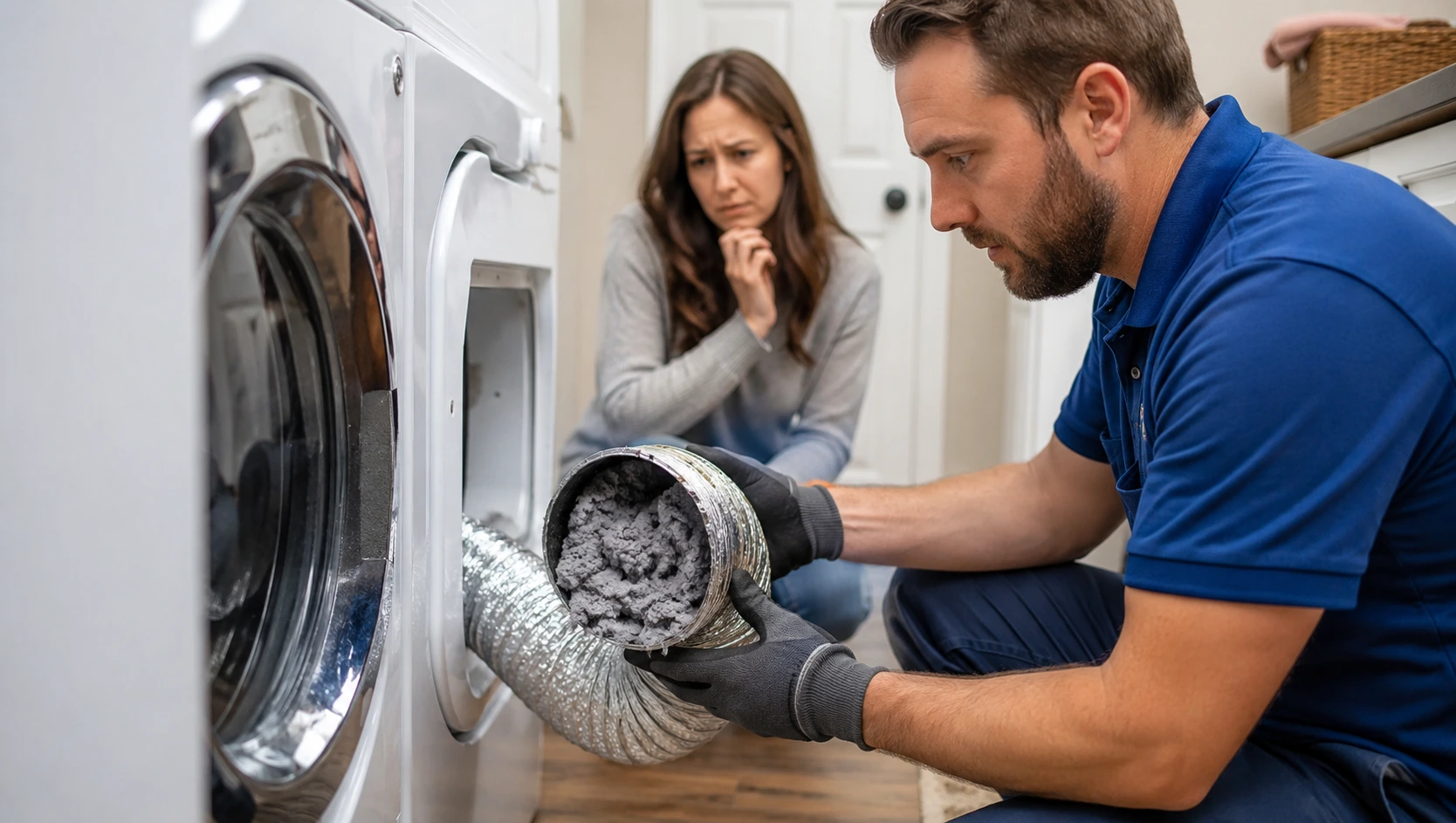
If a dryer suddenly takes multiple cycles to dry clothes, the vent system should be the first thing you inspect.
The dryer vent carries hot, moist air outside your home. Over time, lint accumulates inside the vent line and gradually restricts airflow.
Common signs of a clogged dryer vent include:
- clothes taking longer to dry
- excessive heat inside the laundry room
- dryer overheating
- burning smell
- hot clothing after the cycle ends
- unusually long drying times
Many homeowners clean the lint screen regularly but forget the vent system completely.
The result?
Air becomes trapped inside the appliance instead of moving outdoors where it belongs.
This is one of the most common causes of dryer airflow problems.
Dryer vent maintenance is one of the most overlooked parts of appliance care. Homeowners who want a deeper understanding of how airflow restrictions affect appliance performance can also review this detailed guide on dryer maintenance from another appliance repair professional.
A Dirty Lint Filter Reduces Drying Efficiency
The lint filter may seem like a small component, but it plays a major role in dryer performance.
Every load releases:
- lint
- fabric fibers
- dust particles
- pet hair
When these materials accumulate, airflow becomes restricted.
Even a partially blocked filter can increase drying times significantly.
One interesting detail many homeowners overlook is detergent residue.
Over time, dryer sheets and fabric softeners can create an invisible coating on the lint screen. The screen may look clean, yet airflow remains restricted.
If water pools on top of the filter instead of passing through quickly, the screen likely needs deeper cleaning.
Poor Airflow Causes Clothes to Stay Damp
Dryers depend on consistent airflow throughout the entire cycle.
Air must move through:
- the heating system
- the drum
- the lint filter
- the vent hose
- the exhaust vent
A restriction anywhere in that pathway reduces efficiency.
Poor airflow often causes:
- damp clothing
- uneven drying
- excessive heat buildup
- longer drying cycles
- higher energy consumption
This is why airflow issues are frequently mistaken for heating problems.
The dryer feels hot.
The drum spins normally.
Yet clothes remain wet.
The real issue is usually trapped moisture.
The Heating Element May Be Failing
A faulty heating element can dramatically reduce drying performance.
Electric dryers rely on heating elements to generate the hot air needed for moisture removal.
When the element weakens or partially fails, the dryer may:
- produce less heat
- require multiple cycles
- dry lightweight items but struggle with heavier fabrics
- leave towels and blankets damp
Heating element issues often develop gradually.
Many homeowners assume seasonal humidity is causing the problem when the actual culprit is a worn heating component.
Moisture Sensor Problems Can Affect Cycle Performance
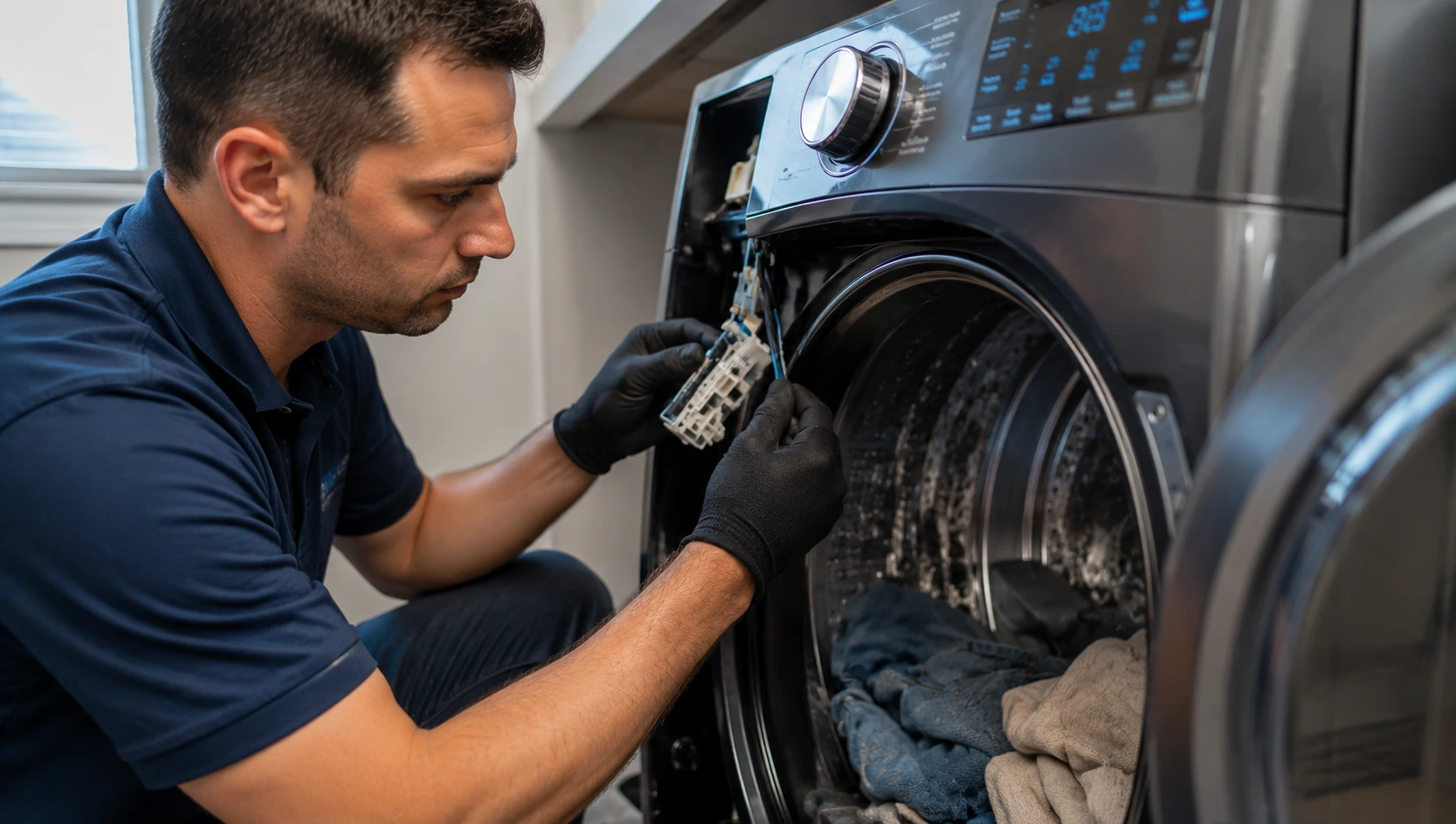
Modern dryers use moisture sensors to determine when clothes are dry.
These sensors help:
- reduce energy consumption
- prevent over drying
- improve cycle efficiency
When sensors become dirty or malfunction, the dryer may behave unpredictably.
Possible symptoms include:
- clothes still damp after dryer cycle
- cycles ending too early
- inconsistent drying performance
- repeated drying cycles
Sensor issues are particularly common in newer high efficiency dryers.
Overloading the Dryer Reduces Air Circulation
Most people have done it.
You are busy. Laundry is piling up. Instead of running two loads, everything gets packed into one.
Unfortunately, overloading creates airflow restrictions inside the drum.
Clothing needs space for:
- tumbling
- heat circulation
- moisture evaporation
When items become compressed together, moisture remains trapped between fabrics.
Large comforters, blankets, and towels often create this issue.
Even a perfectly functioning dryer will struggle to dry overloaded loads efficiently.
Dryer Vent Hose Problems Are Often Overlooked
The flexible vent hose behind the dryer deserves more attention than it usually receives.
Over time, hoses can:
- become crushed
- kink behind the appliance
- collect lint buildup
- disconnect partially
Any of these issues reduce airflow.
A simple hose inspection can sometimes solve drying problems that homeowners have been dealing with for months.
This is one of the easiest troubleshooting steps to perform before considering professional repair.
Why Long Drying Times Increase Energy Costs
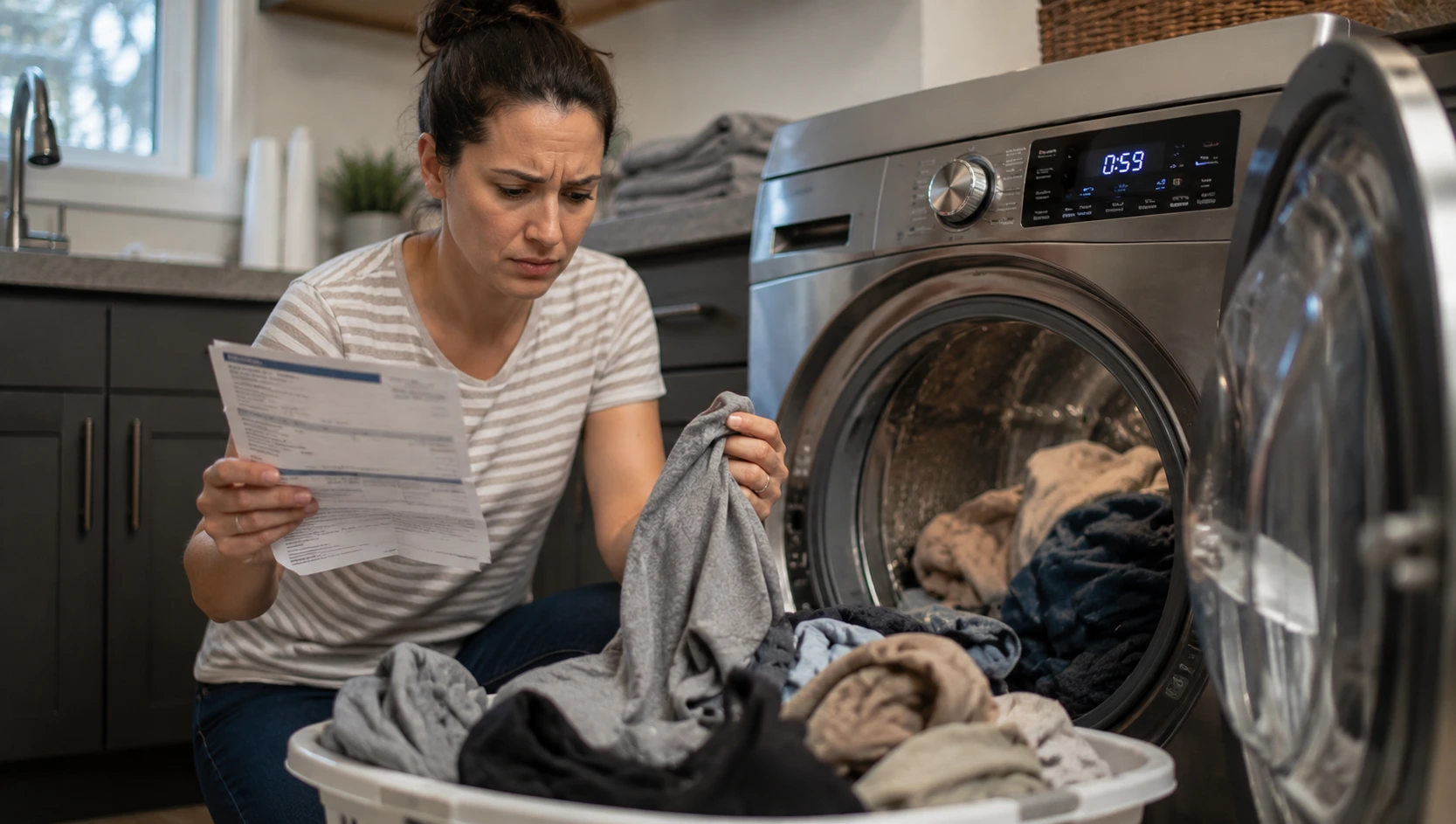
Many homeowners focus only on convenience when dealing with slow drying cycles.
The bigger issue is often energy waste.
A dryer running:
- two cycles instead of one
- three cycles instead of one
uses significantly more electricity or gas.
Long drying times also increase wear on:
- heating elements
- thermostats
- blower wheels
- motors
- drum rollers
What starts as a small airflow restriction can eventually contribute to larger appliance repairs.
When DIY Fixes Are No Longer Enough
Some dryer issues are simple.
Cleaning the lint screen.
Checking the vent hose.
Reducing load sizes.
Others require professional diagnosis.
Consider professional inspection if you notice:
- burning smells
- repeated overheating
- no heat production
- electrical issues
- loud noises
- persistent drying problems despite maintenance
Modern dryers contain complex components including:
- heating assemblies
- thermal fuses
- moisture sensors
- control boards
- blower systems
Attempting repairs without proper diagnosis can sometimes create bigger problems.
For homeowners in Albany dealing with recurring dryer performance issues, professional troubleshooting can often identify hidden airflow or heating system failures before complete breakdown occurs.
How to Prevent Long Dryer Cycles
Preventative maintenance helps dryers operate efficiently for years.
Here are some simple habits that make a difference.
Clean the Lint Filter After Every Load
This is the easiest and most important maintenance step.
Inspect the Vent System Regularly
Vent cleaning helps maintain proper airflow and reduces fire risks.
Avoid Overloading the Drum
Smaller loads dry faster and place less stress on components.
Check the Exhaust Vent Outside
Make sure airflow is strong and unrestricted.
Schedule Periodic Dryer Maintenance
Routine inspections help catch problems before they become expensive repairs.
Frequently Asked Questions
Why is my dryer taking two cycles to dry clothes?
The most common causes include restricted airflow, clogged vents, dirty filters, heating element issues, or overloaded laundry loads.
Can a clogged dryer vent cause clothes to stay damp?
Yes. A clogged vent prevents moist air from leaving the appliance, making it difficult for clothes to dry properly.
Why does my dryer feel hot but not dry clothes?
This often points to airflow restrictions. Heat becomes trapped inside the dryer while moisture remains inside the drum.
Does overloading affect drying performance?
Absolutely. Overloaded drums restrict airflow and reduce heat circulation around clothing.
Is a slow dryer a sign it needs repair?
Sometimes. While simple maintenance may solve the problem, persistent drying issues often indicate component failures that require professional diagnosis.
Final Thoughts
A dryer that takes too long to dry clothes is usually trying to tell you something.
Sometimes the solution is as simple as cleaning a lint filter. Other times, airflow restrictions, heating element problems, or moisture sensor failures are quietly reducing performance behind the scenes.
The good news is that many drying issues can be identified early.
The sooner the problem is addressed, the easier it is to restore efficiency, reduce energy waste, and avoid larger repairs later.
And honestly, many homeowners discover that the issue was not the dryer itself. It was the vent system working harder and harder until it could no longer keep up.


