

Dishwasher Not Draining Properly? Common Causes and Fixes
Why Your Dishwasher Is Not Draining Properly
You open the dishwasher expecting clean, dry dishes. Instead, there is cloudy water sitting at the bottom of the tub. The plates feel greasy. The whole interior smells like old food. And somehow the cycle finished as if everything was fine.
The short answer: A dishwasher stops draining properly because of a clogged filter, blocked drain hose, food debris buildup, garbage disposal connection problems, or a failing drain pump. In some cases, standing water also points to a blocked air gap or a restriction somewhere in the drainage line.
The frustrating part is that dishwasher drainage problems almost never start dramatically. There is a little standing water one evening. A faint odor near the sink the next morning. Slower draining that nobody catches for weeks. Then one busy weeknight, the dishwasher is completely full of dirty water after dinner.
And honestly, most homeowners assume the whole appliance is broken long before they even check what is actually happening.
This guide walks through every common reason a dishwasher stops draining, what you can safely inspect yourself, how to prevent drainage issues going forward, and when professional repair becomes the smarter call.
What Causes a Dishwasher to Stop Draining?
Most dishwasher drainage problems happen because water cannot move freely through the appliance’s drainage system.
That system includes several components working together: the dishwasher filter, the drain hose, the drain pump, the garbage disposal connection, the air gap, and the sink drain line. If any one of those parts becomes restricted, dirty water stays trapped inside the tub instead of draining away.
Modern dishwashers are especially sensitive to blockages. They use significantly less water than older models and rely on efficient circulation to function properly. Even a partial restriction can noticeably affect draining performance over time.
Why Does My Dishwasher Have Standing Water After a Cycle?
Standing water in the dishwasher after a completed cycle almost always means something is blocking normal drainage. The water has nowhere to go, so it stays.
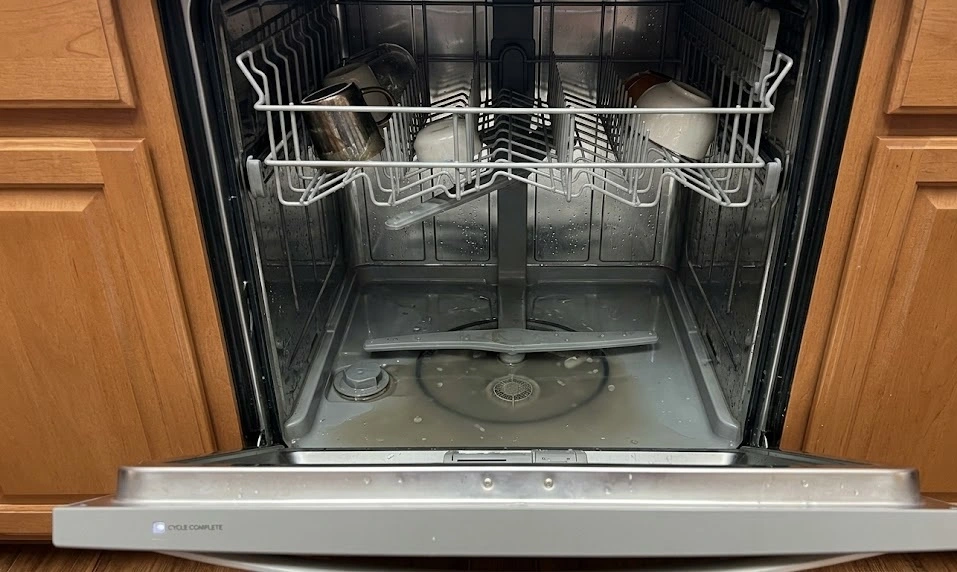
The most common culprits are a clogged dishwasher filter, a blocked or kinked drain hose, a jam inside the drain pump, or a restriction connected to the garbage disposal or sink drain. Less commonly, a faulty float switch or a failing control board can also prevent the drain cycle from completing properly.
The thing to understand is that a small blockage can cause just as much visible standing water as a complete failure. So the amount of water sitting in the dishwasher does not always tell you how serious the underlying problem is.
A Clogged Dishwasher Filter Is the Most Common Cause
This is where most dishwasher drainage problems begin.
The filter sits at the bottom of the tub and catches food particles, grease, soap residue, and small debris before water drains out. Over time, that buildup accumulates and starts restricting water flow through the drainage system.
Signs of a clogged filter include standing water at the bottom of the tub, dishes with a cloudy or gritty residue, unpleasant odors during or after cycles, and generally sluggish draining.
What catches many homeowners off guard is that a dirty filter rarely announces itself immediately. The dishwasher still runs. Water still sprays. The cycle sounds completely normal. But drainage gets progressively weaker week by week until the tub stops emptying almost entirely.
Many dishwasher drainage problems can be resolved with a thorough filter cleaning. It takes maybe ten minutes and no tools.
How to clean the dishwasher filter:
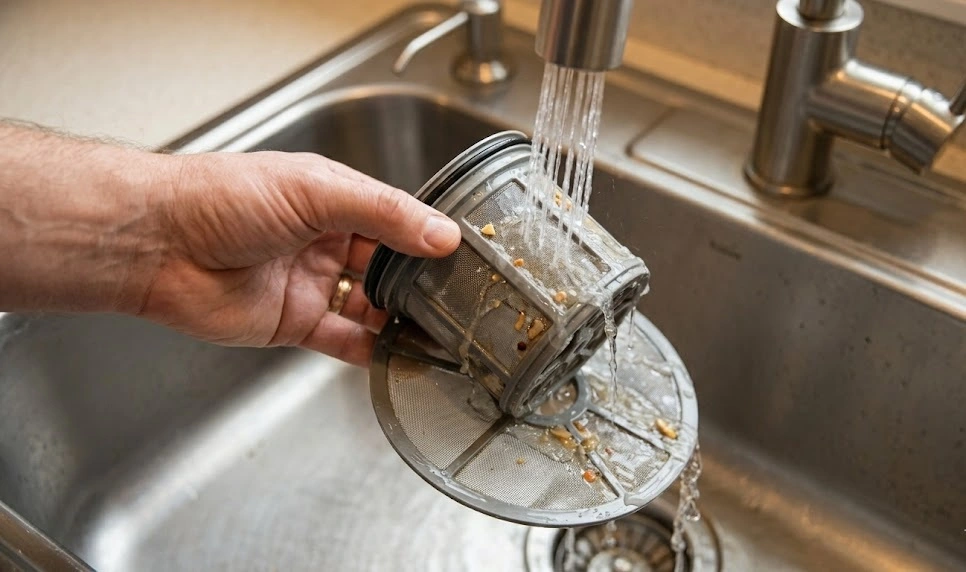
Remove the lower rack and locate the cylindrical filter assembly near the center of the tub floor. Twist it counterclockwise to release it, then lift out both the upper cylindrical filter and the flat mesh filter beneath it. Rinse both pieces under warm running water and use a soft brush or old toothbrush to clear away grease and food buildup. Mild dish soap works well for stubborn residue. Reinstall carefully and run a short cycle to test drainage.
Most households should clean the dishwasher filter at least once a month, or more frequently if the dishwasher runs daily.
A Blocked or Kinked Drain Hose Can Stop Drainage Completely
The drain hose carries wastewater from the dishwasher through the cabinet and into the plumbing system, usually connecting to the garbage disposal or sink drain.
When the hose becomes clogged with grease, food debris, or soap buildup, water backs up into the tub instead of leaving properly. A kinked hose can create the same problem without any debris at all. The hose simply cannot move water through a sharp bend.
A dishwasher drain hose clogged with grease often produces foul odors as well, because dirty water sits trapped inside the line between cycles.
What to check: Pull the dishwasher slightly forward if possible and visually inspect the hose where it exits the appliance and where it connects under the sink. Look for sharp bends, kinks, or crushed sections. If the hose appears intact, disconnecting it from the disposal or drain fitting and flushing it with water can confirm or rule out an internal clog.
A properly installed drain hose should loop up toward the underside of the counter before dropping down to the connection point. This high-loop prevents backflow. If the hose runs in a continuous downward slope, gravity can pull water back into the dishwasher between cycles.
Garbage Disposal Connection Issues Are Easy to Overlook
This particular problem causes enormous confusion because homeowners spend time troubleshooting the dishwasher while the real blockage sits a foot away under the sink.
Many dishwashers drain directly into the garbage disposal. When food waste builds up inside the disposal, it can restrict the dishwasher drain connection as well. The dishwasher tries to drain, the water hits a restriction at the disposal inlet, and the tub ends up full again.
There is also a well-known installation mistake that causes immediate drainage failure: a new garbage disposal ships with a knockout plug inside the dishwasher drain inlet. If the installer forgets to remove that plug before connecting the dishwasher, the appliance will not drain at all from day one.
If the disposal unit itself is damaged beyond cleaning, a professional garbage disposal repair service can restore proper drainage before it affects the dishwasher further.
Quick check: Run the garbage disposal for about thirty seconds before starting a dishwasher cycle. If drainage improves noticeably, the disposal connection was likely the restriction all along. This is a surprisingly common fix, especially after holiday cooking or heavy use.
A Faulty Drain Pump Prevents Water from Leaving the Tub
The drain pump is the component that actually pushes wastewater out of the dishwasher during the drain phase of the cycle. If the pump becomes obstructed or fails mechanically, the water has no force pushing it toward the drain.
Signs of a drain pump problem include a humming sound during the drain cycle without actual drainage, the dishwasher stopping mid-cycle, water draining inconsistently between loads, or the tub remaining completely full after every cycle.
Small hard objects are the most common cause of pump jams. Broken glass fragments, fruit pits, toothpicks, small labels, and food particles can all work their way down past the filter and lodge inside the pump assembly.
This matters because many homeowners assume they need a new dishwasher when the actual problem is a jam inside the pump that a technician can clear in twenty minutes. A clogged pump and a dead dishwasher are very different situations.
If the pump motor itself has failed rather than just become jammed, replacement becomes necessary. But an inspection should always come before that assumption.
A Blocked Air Gap Creates Drainage Problems That Look Much Worse
Not every kitchen has an air gap, but in areas where local plumbing codes require them, a blocked air gap can bring dishwasher drainage to a halt.
The air gap is a small chrome or plastic cylinder mounted on the countertop or sink deck near the faucet. Its job is to prevent dirty drain water from siphoning back into the dishwasher. Water from the dishwasher drain hose flows up through the air gap, then back down to the disposal or drain line.
When the air gap becomes clogged with debris, water cannot pass through it properly. The dishwasher drain is essentially backing up against itself.
Symptoms of a blocked air gap include slow drainage, standing water, and sometimes water spilling out from the top of the air gap fitting itself during the drain cycle.
Cleaning an air gap is straightforward: remove the decorative cap, lift off the inner cover, and clear out any debris that has collected inside. It is a two-minute fix that sometimes solves what appeared to be a serious dishwasher failure.
The Float Switch Can Prevent Draining When It Malfunctions
The float switch is a small safety component, usually a plastic dome or cylinder on the tub floor, that monitors the water level inside the dishwasher. If water rises too high, the float rises and triggers the switch to stop the fill cycle and activate drainage.
When the float gets stuck in the raised position, the dishwasher may think it is perpetually overfull and either refuse to fill or attempt to continuously drain. When it gets stuck in the lowered position, water can potentially overflow. Either malfunction disrupts normal cycle operation.
Float switch problems are less common than filter or hose issues but worth checking if all the more obvious causes have been ruled out. The float itself should move freely up and down. Food debris or mineral buildup sometimes causes it to stick.
Warning Signs Your Dishwasher Drainage Problem Is Getting Worse
Dishwasher drainage issues almost always develop gradually. Knowing the warning signs early can save a lot of frustration later.
Watch for these:
- Water sitting at the bottom of the tub after every cycle
- A persistent sour or musty smell coming from the dishwasher
- Dishes that come out greasy or with food residue even after a full cycle
- Water pooling on the kitchen floor around the appliance
- Gurgling sounds from the sink drain during or after the dishwasher cycle
- The dishwasher stopping before the cycle completes
- Drainage that seems slower than it used to be
One detail many homeowners miss: standing dirty water creates ideal conditions for bacteria and mold growth inside the dishwasher. That is why drainage problems often become noticeable through smell before the water becomes obvious. The odor is frequently the first real warning sign.
If you also notice your washing machine draining slowly or your refrigerator collecting moisture it should not be, those issues sometimes share a root cause with drainage and ventilation problems worth investigating at the same time.
How to Troubleshoot a Dishwasher That Won’t Drain
Many dishwasher drainage problems can be resolved without calling anyone. Work through these steps in order before assuming a deeper mechanical failure.
Always disconnect power to the dishwasher before reaching into the tub or inspecting components.
Step 1: Clean the Filter
Remove the lower rack, twist out the filter assembly, and rinse it thoroughly under warm water. Use a soft brush to remove grease and debris. This single step resolves drainage problems more often than anything else.
Step 2: Inspect the Drain Hose
Check the hose under the sink for kinks, sharp bends, or obvious blockages. Confirm it has a high loop before connecting to the disposal or drain. A hose that runs downhill continuously invites backflow.
Step 3: Run the Garbage Disposal
If your dishwasher drains into the disposal, run it for thirty seconds before starting a cycle. Clear any food buildup from the disposal first. This sometimes restores drainage immediately.
Step 4: Check the Air Gap
If your sink has an air gap fitting, remove the cap and clean out any debris inside. Takes two minutes and costs nothing.
Step 5: Clear Debris from the Drain Area
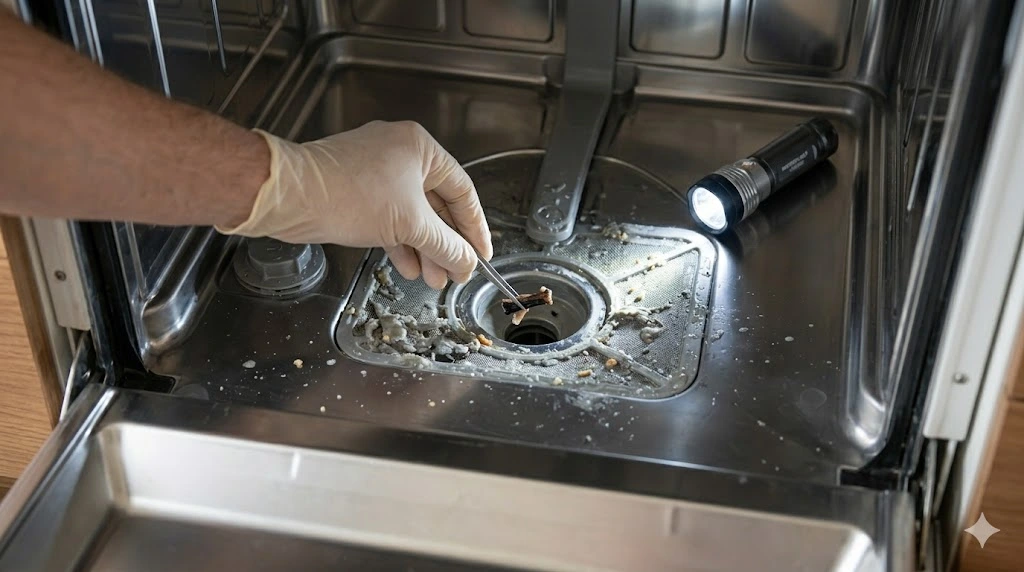
With the filter removed, use a flashlight to look into the drain opening at the bottom of the tub. Remove any visible debris by hand. Check around the spray arms for accumulated food particles that may be contributing to drainage restriction.
Step 6: Run a Hot Water Cycle with Dishwasher Cleaner
Commercial dishwasher cleaning tablets help break down grease and soap residue inside hoses and the drainage system. Running a cleaning cycle every month or two helps maintain drainage performance between deeper cleanings.
How to Prevent Dishwasher Drainage Problems
A little regular maintenance prevents the vast majority of drainage issues before they develop.
Clean the filter monthly. This is the single most effective prevention habit. It takes less than ten minutes and keeps the drainage system clear of the grease and debris that cause most problems.
Scrape plates before loading. Dishwashers handle food residue well, but loading heavily soiled dishes with large food particles accelerates filter clogging and puts unnecessary strain on the drain pump.
Avoid using too much detergent. Excess detergent creates thick residue that builds up inside hoses, filters, and the drain pump housing over time. Follow the manufacturer’s recommended amount, and consider using a rinse aid to improve drainage at the end of cycles.
Run hot water at the sink before starting the dishwasher. This ensures the dishwasher begins filling with already-hot water, which improves grease breakdown during the wash and drain cycles.
Periodically inspect the drain hose connection. A quick look under the sink every few months can catch a developing kink or a loose connection before it becomes a drainage problem.
Run the garbage disposal before each dishwasher cycle. If your dishwasher connects to the disposal, keeping the disposal clear helps maintain unobstructed drainage for both appliances.
For model-specific maintenance intervals and filter cleaning schedules, the Consumer Reports dishwasher maintenance guide is a reliable reference point.
When to Call a Professional for Dishwasher Repair
Basic troubleshooting resolves a lot of drainage problems. But some situations call for professional diagnosis.
Consider contacting a technician if:
- Standing water returns consistently after every cycle despite cleaning the filter and hose
- The dishwasher makes loud grinding or humming sounds during the drain cycle
- Water leaks from underneath the appliance
- The dishwasher stops mid-cycle repeatedly
- Drainage problems persist after all visible blockages have been cleared
- You suspect a problem with the drain pump, float switch, or control board
Modern dishwashers involve electronic control systems, drainage sensors, and circulation assemblies that interact in ways that make guesswork repairs risky. Misidentifying the problem can turn a simple fix into a more expensive one.
If drainage problems have been recurring or worsening over time, working with an experienced local dishwasher technician often saves money compared to replacing the appliance prematurely. A thorough diagnosis usually identifies whether repair or replacement makes more economic sense for your specific situation.
For Albany-area homeowners dealing with persistent drainage failures, professional dishwasher repair in Albany NY can often restore full function before the problem escalates further.
For a broader look at how drainage and mechanical issues develop across household appliances, our appliance repair resource center covers common problems across refrigerators, washers, and more.
Frequently Asked Questions About Dishwasher Drainage Problems
Why is there standing water in my dishwasher after a cycle?
Standing water after a completed cycle almost always means something is blocking normal drainage. The most common causes are a clogged dishwasher filter, a blocked or kinked drain hose, a garbage disposal connection problem, or a jammed drain pump. Start with the filter since it resolves the issue in most cases.
Can a clogged filter alone stop a dishwasher from draining completely?
Yes. A heavily clogged filter can restrict water flow enough to leave the tub full of dirty water after a cycle. The dishwasher may complete the cycle normally otherwise, which makes the filter easy to overlook as the cause. Regular monthly cleaning prevents this.
Why does my dishwasher smell bad even after running a cycle?
Dishwasher odors are almost always caused by food debris, grease buildup, and standing water that does not drain properly. Bacteria thrive in warm, damp conditions with organic material available. Cleaning the filter, running a dishwasher cleaning cycle, and resolving any underlying drainage restriction usually eliminates the smell.
Why does my dishwasher back up when I run it?
If water appears in the sink or the dishwasher backs up during operation, the problem is likely a shared drain restriction. Food buildup inside the garbage disposal, a clogged sink drain, or a blocked air gap can all cause backflow between the sink and dishwasher drainage systems.
How often should I clean my dishwasher filter?
Most households should clean the dishwasher filter at least once a month. Families who run the dishwasher daily or frequently load heavily soiled dishes may benefit from cleaning every two to three weeks.
Is it normal for a small amount of water to sit in the bottom of the dishwasher?
A very small amount of water remaining in the sump area at the very bottom of the tub is normal for many dishwasher models. It keeps the pump seal from drying out. However, water that visibly covers the tub floor or reaches the bottom of the door is not normal and indicates a drainage problem.
My dishwasher drains fine sometimes but not others. What does that mean?
Intermittent drainage usually points to a partial blockage rather than a complete failure. A partially clogged filter, a hose with some grease buildup, or a garbage disposal that only sometimes restricts flow can all cause drainage that works inconsistently. Cleaning the filter and checking the hose and disposal connection typically resolves it.
Final Thoughts
Dishwasher drainage problems rarely arrive all at once. The warning signs tend to show up quietly over weeks or months. A little standing water after a cycle. A smell that was not there before. Dishes that do not come out quite as clean as they used to.
Those early signals almost always point to blockages or restrictions that get gradually worse over time. The good news is that catching them early usually means a simple cleaning rather than a repair. And most homeowners who check the filter first are genuinely surprised at how quickly the problem resolves.
If basic troubleshooting does not clear the issue, or if drainage problems keep coming back, that is the point where professional diagnosis tends to pay for itself. Catching a failing drain pump or a compromised drain hose early is considerably cheaper than the water damage or appliance failure that comes from letting it run until something breaks completely.
For related appliance troubleshooting, take a look at our guides on common washing machine drainage problems and why refrigerators leak water — two issues that homeowners often deal with around the same time as dishwasher trouble.


