

Common Refrigerator Problems
Common Refrigerator Problems That Need Professional Repair
Your refrigerator never takes a day off. It runs through the night, through the summer heat, through every holiday meal and grocery run. Most homeowners never think about it until one morning the milk smells off, or there is water sitting underneath the vegetable drawers, or the freezer looks like it survived a blizzard.
That is usually when the questions start.
Here is the direct answer: the most common refrigerator problems that require professional repair include cooling failure, water leakage, excessive frost buildup, unusual noises, compressor issues, faulty thermostats, and ice maker malfunctions. Each of these points toward failing internal components that need proper diagnosis before they develop into a much costlier breakdown.
Refrigerator problems almost never fix themselves. They just get quieter for a while.
Many homeowners keep waiting because the appliance still “kind of works.” The temperature feels cold enough. The noise fades after a few minutes. The puddle under the drawers dries up by morning. Then one week later, a full refrigerator worth of groceries spoils overnight.
That situation becomes significantly worse during warmer months when the cooling system is already working harder to keep up.
Why Refrigerator Problems Get Worse When You Wait
A refrigerator is one of the only appliances in your home running continuously, every single hour of every day. That constant workload puts ongoing stress on components like the compressor, condenser coils, evaporator fan, defrost system, and thermostat.
When one part starts struggling, the entire cooling system absorbs the strain. Experienced appliance repair technicians in Livonia and across the country consistently find that most major cooling failures trace back to smaller warning signs that were left unaddressed.
What most homeowners do not realize is that a refrigerator can still feel cold while internal temperatures have already risen to unsafe levels for food storage. Milk spoils faster than expected. Produce wilts within a day or two. Meat develops an odor before its expiration date.
The appliance technically runs. It just no longer maintains proper cooling.
The FDA recommends keeping refrigerator temperatures at or below 40 degrees Fahrenheit to prevent food safety risks. Even a few degrees above that threshold, sustained over several days, creates conditions where harmful bacteria multiply much faster than most people expect.
Refrigerator Not Cooling Properly
Cooling problems are among the most common refrigerator complaints, and they are also the most misunderstood.
The frustrating part is that a refrigerator can lose cooling efficiency for several different reasons. Guessing at the cause without proper diagnosis usually leads to replacing the wrong part.
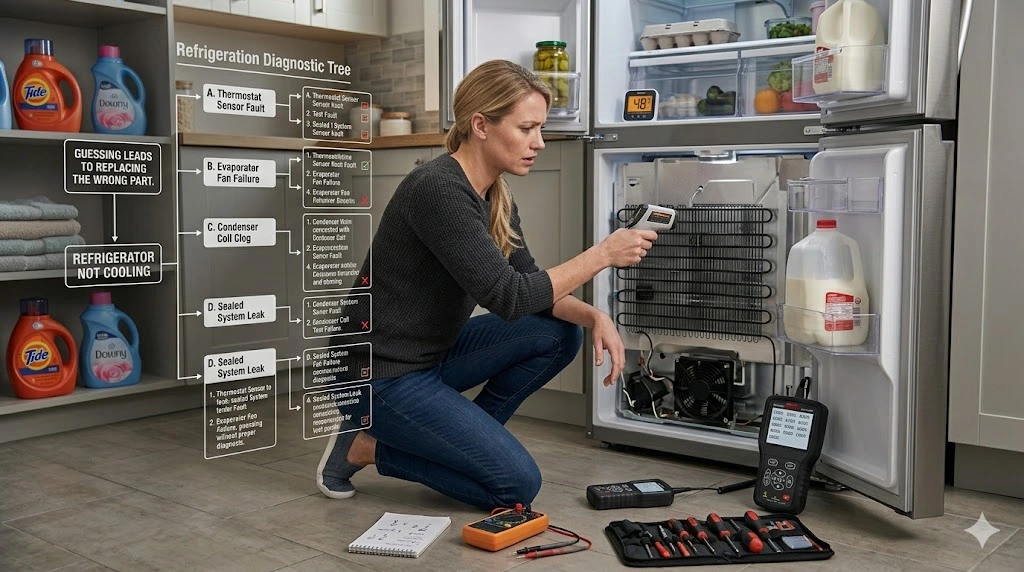
What is actually happening when a refrigerator stops cooling?
The cooling system relies on refrigerant circulating through a closed loop involving the compressor, condenser coils, and evaporator coils. When airflow is restricted, refrigerant circulation is disrupted, or a mechanical component fails, the system loses its ability to remove heat from the refrigerator interior efficiently.
Common causes include:
- Dirty or blocked condenser coils
- Faulty or miscalibrated thermostat
- Damaged evaporator fan motor
- Blocked air vents between compartments
- Refrigerant circulation problems
- Compressor failure
Condenser coils tend to be the most overlooked cause. When coils collect dust, pet hair, and grease buildup over months of normal operation, heat cannot escape efficiently. The refrigerator runs longer cycles, works harder, and cools less effectively while energy consumption quietly increases.
One symptom worth paying attention to: if the freezer compartment stays cold while the fresh food section grows warmer, that pattern usually points toward airflow or evaporator fan problems rather than complete compressor failure. The distinction matters because those are very different repairs.
A fully failed compressor creates rapid, severe cooling loss across both compartments. An evaporator fan issue or blocked airflow path tends to develop more gradually, with the fresh food section warming first while the freezer holds temperature longer.
If your refrigerator is not staying cold despite normal usage, that is not something to wait on.
Fridge Leaking Water on the Floor
Water pooling beneath the refrigerator or inside the lower compartments is one of those problems homeowners tend to discover by accident. Usually by stepping in it barefoot.
Why is water leaking from my refrigerator?
Water leaks from a refrigerator almost always trace back to a drainage or water supply issue somewhere in the appliance.
Common causes include:
- Clogged or frozen defrost drain line
- Cracked or loose water supply line
- Faulty water inlet valve
- Excess condensation buildup from a damaged door gasket
- Blocked drain pan beneath the unit
The defrost drain is a particularly common culprit in modern refrigerators with automatic defrost systems. During normal defrost cycles, water drips down to a drain tube and flows to a collection pan below the unit where it evaporates. When that drain line becomes clogged with food debris or freezes over, water has nowhere to go except back into the refrigerator compartment or onto the floor.
Here is what often surprises homeowners about water leaks: by the time a puddle appears on the kitchen floor, moisture has frequently already been accumulating inside the appliance or beneath it for days. That moisture can affect flooring materials, cabinet bases, and insulation in ways that go well beyond the refrigerator itself.
Small leak today. Potential water damage problem next month.
Refrigerator Making Loud or Strange Noises
Every refrigerator makes some noise during normal operation. A soft hum from the compressor. Light clicking when the thermostat cycles. Occasional sounds from ice dropping in the freezer.
Loud buzzing, grinding, rattling, or persistent clicking sounds are a different situation entirely.
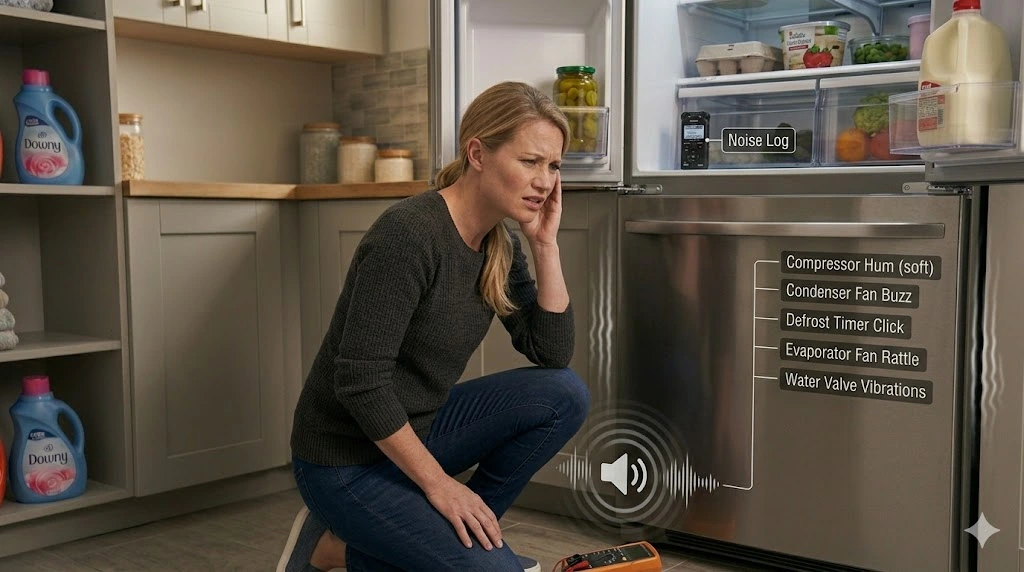
What does a noisy refrigerator usually mean?
Unusual refrigerator noises typically point toward mechanical stress or obstruction in one of the moving components.
Common causes include:
- Failing evaporator fan motor
- Condenser fan obstructed by debris
- Compressor struggling under excess load
- Ice buildup pressing against internal fan blades
- Loose or vibrating internal components
The condenser fan motor is frequently overlooked. As dust and debris accumulate around the fan blades over time, the motor works against increasing resistance. The appliance still functions. The fan still spins. But the motor is gradually wearing down while performance quietly drops.
One pattern worth noting: many homeowners wait months before addressing strange refrigerator sounds because the noise “comes and goes.” That intermittent quality creates a false sense that the issue is minor or self-resolving.
In most cases, the noise disappears because the component briefly works past the friction or obstruction, not because anything has improved. The underlying wear continues regardless.
Ice Maker Not Working
Ice maker problems tend to feel more urgent than they probably should, but they also carry a useful diagnostic signal. Because the ice maker connects to the water supply system and depends on precise temperature conditions inside the freezer, problems with it can reflect broader refrigerator issues worth investigating.
Why did my ice maker suddenly stop working?
Common ice maker problems include:
- Frozen water supply line
- Faulty water inlet valve
- Clogged or overdue water filter
- Temperature imbalance in the freezer compartment
- Broken ice maker sensor or switch
- Low household water pressure
One cause homeowners frequently create themselves without realizing it: delaying water filter replacement beyond the manufacturer’s recommended schedule. A severely clogged filter restricts water flow to the ice maker, which puts strain on the water inlet valve and can eventually disrupt the entire ice production cycle.
Samsung, LG, Whirlpool, GE, and Frigidaire refrigerators all have documented ice maker issues related to water flow restrictions, temperature fluctuations, and sensor calibration. These issues often appear intermittent before they stop entirely.
Freezer Frost Buildup
A thin dusting of frost on freezer walls is normal. Thick ice accumulation covering surfaces, blocking shelves, or forming around the evaporator coils is a sign that the defrost system or the sealed environment of the freezer compartment is failing.
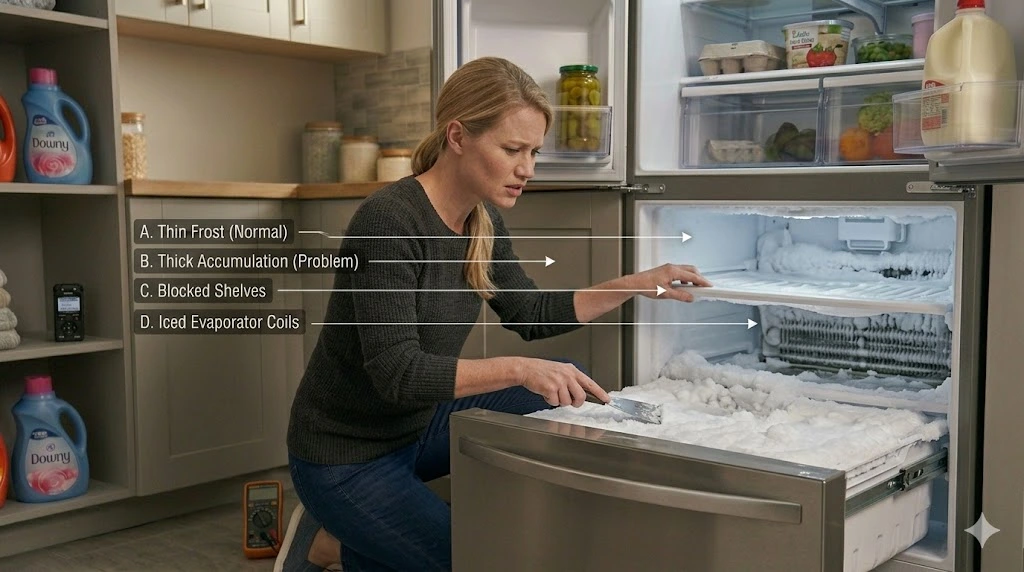
Why does frost keep building up in my freezer?
Excessive frost buildup usually points toward one of these causes:
- Failed defrost heater or defrost thermostat
- Malfunctioning defrost timer or control board
- Damaged or warped door gasket
- Door left slightly ajar from overpacking
- Blocked airflow inside the freezer compartment
The door gasket tends to be a surprisingly significant factor. A small tear, a compressed section that no longer seals properly, or a gasket that has simply worn out over years of use can allow warm, humid air to enter the freezer continuously. That moisture freezes on contact with cold surfaces, building up layer by layer over days and weeks.
The resulting frost accumulation forces the refrigerator to run more frequently, reduces energy efficiency, and gradually blocks airflow paths that the cooling system depends on.
This is one of those problems that worsens slowly enough that many homeowners adjust to it. The freezer keeps getting harder to open. Items near the back get buried in frost. The refrigerator runs more often than it used to. Each change happens gradually enough that it gets normalized rather than addressed.
Refrigerator Running Constantly
Refrigerators cycle on and off throughout the day as the thermostat monitors internal temperatures and signals the compressor to maintain them. That cycling is normal. A refrigerator that never stops running is not.
What causes a refrigerator to run constantly?
Possible causes include:
- Dirty condenser coils forcing extended run cycles
- Faulty thermostat failing to recognize target temperature
- Damaged door seals allowing warm air infiltration
- Refrigerator overpacked with items blocking airflow
- Compressor running under excessive load
- High ambient kitchen temperatures in summer months
Some seasonal variation is expected. A refrigerator works harder when the surrounding environment is warmer, particularly during summer. Even accounting for that, sustained nonstop operation signals that the cooling system is working against something it should not have to overcome.
One overlooked contributor: refrigerator packing habits. Cold air needs room to circulate between shelves and around food containers. When every shelf is completely packed, airflow circulation is reduced. The refrigerator compensates by running longer, which increases electricity consumption and puts additional stress on the compressor over time.
Refrigerator Compressor Problems
The compressor is the mechanical heart of the refrigerator cooling system. It pressurizes refrigerant, which then flows through the condenser coils and evaporator coils to transfer heat out of the refrigerator interior.
How do you know if your refrigerator compressor is failing?
Signs of compressor problems include:
- Refrigerator running constantly but not cooling adequately
- Loud clicking or hard-starting sounds when the compressor tries to cycle on
- Complete cooling failure across both refrigerator and freezer compartments
- Unusually warm condenser area near the back or bottom of the unit
- Refrigerator starting and stopping rapidly without completing cooling cycles
Compressor issues are among the more serious refrigerator repairs. Modern inverter compressors used in many current refrigerator models require specialized diagnostic equipment to test properly. Attempting to assess compressor condition without proper tools frequently leads to misdiagnosis.
If the compressor is confirmed failed and the refrigerator is more than ten years old, a repair versus replacement conversation becomes relevant. For newer appliances, compressor repair or replacement typically makes strong financial sense.
Faulty Refrigerator Thermostat
The thermostat monitors internal temperature and signals the compressor to cycle on when cooling is needed and off when target temperature is reached. A faulty thermostat disrupts that regulation loop in ways that can look like several different problems.
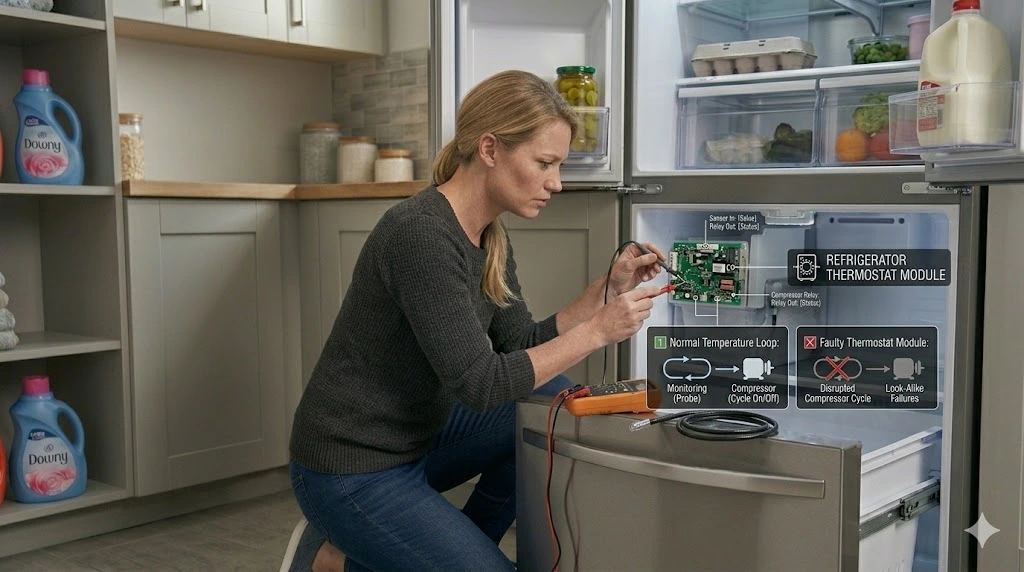
What happens when a refrigerator thermostat fails?
A faulty thermostat can cause:
- Refrigerator not cooling enough because the compressor never receives an “on” signal
- Refrigerator overcooling and freezing fresh food because the compressor never receives an “off” signal
- Inconsistent temperatures that vary significantly throughout the day
- Compressor running constantly without reaching stable temperature
Thermostat problems are often mistaken for compressor issues because the symptoms overlap. A qualified technician can distinguish between the two with proper diagnostic testing.
Signs Your Refrigerator Needs Professional Repair
Some refrigerator problems fall within reasonable DIY territory. Cleaning condenser coils. Replacing a water filter. Adjusting temperature settings. Checking door seal condition.
Other issues move well beyond that threshold quickly.
Professional diagnosis becomes important when you notice any of the following:
- Persistent cooling problems that do not resolve after basic maintenance
- Burning smell or unusual electrical odor near the refrigerator
- Significant or recurring water leakage
- Clicking sounds followed by no compressor startup
- Grinding or loud buzzing from fan or compressor components
- Frost accumulation that rebuilds rapidly after manual defrosting
- Food spoiling faster than expected at consistent temperature settings
- Refrigerator that is less than ten years old but shows major performance decline
Modern refrigerators involve electronic control boards, inverter compressors, smart sensors, and airflow management systems that require proper diagnostic equipment to assess accurately. Guesswork repairs on these systems often create larger problems or damage components that were still functioning correctly.
If you are dealing with recurring issues and are located in the Albany area, a professional appliance repair technician can diagnose the actual cause rather than treating symptoms one at a time.
How to Prevent Common Refrigerator Problems
Preventative maintenance extends refrigerator lifespan and reduces the frequency of breakdowns. Given that a refrigerator runs every hour of every day, even small maintenance habits compound into meaningful results over time.
Clean Condenser Coils Every Six to Twelve Months
Dust and debris on condenser coils reduce heat dissipation efficiency, force longer run cycles, and increase compressor strain. Most manufacturers recommend cleaning coils at least once per year. Households with pets that shed heavily may benefit from cleaning more frequently.
Inspect Door Gaskets Regularly
Check the seal around refrigerator and freezer doors periodically. A simple test: close the door on a dollar bill and try pulling it out. If it slides out without resistance, the gasket is not sealing properly. Even small gaps allow continuous warm air infiltration.
Replace Water Filters on Schedule
Most manufacturers recommend replacing water filters every six months. Overdue filters restrict water flow to the ice maker and water dispenser, which creates stress on the inlet valve and ice production system over time.
Avoid Blocking Air Vents
Cold air circulation depends on clear pathways between the freezer and fresh food compartments. Containers pushed against vents, shelves packed to the edges, and items blocking rear wall openings all reduce airflow and create uneven temperature zones.
Keep Temperature Settings Stable
The FDA recommends 40 degrees Fahrenheit or below for the fresh food compartment and 0 degrees Fahrenheit for the freezer. Avoid frequent manual adjustments, which can create instability in the thermostat regulation cycle.
The same preventative mindset applies to other appliances too. If you want to understand early warning signs in another common household appliance, our guide on washing machine drainage problems is worth a read.
Frequently Asked Questions
Why is my refrigerator running but not cooling?
A refrigerator that runs without cooling adequately usually points toward dirty condenser coils, a faulty thermostat, a failing evaporator fan motor, or a compressor problem. Airflow restrictions from blocked vents or overpacking can also cause this symptom. Because several different causes produce identical symptoms, proper diagnosis is important before replacing parts.
Can a refrigerator leak water without being broken?
Yes. A clogged defrost drain or a frozen drain tube can cause water to back up and leak even when the major cooling components are still functioning normally. However, even “minor” leaks should be addressed promptly because moisture can damage flooring, insulation, and cabinet materials before the source of the leak becomes obvious.
Why does frost keep building up in my freezer?
Rapid or excessive frost buildup in the freezer usually indicates a problem with the defrost system, a damaged door gasket, or a door that is not sealing completely. The defrost heater, defrost thermostat, and defrost timer all play roles in preventing frost accumulation during normal operation.
Is a noisy refrigerator a serious problem?
It depends on the type of noise. Soft humming and occasional clicking are normal. Grinding, loud buzzing, hard rattling, or repeated clicking without the compressor starting are signs of mechanical trouble that typically worsen over time if not addressed. These sounds often indicate failing fan motors or compressor stress.
How long should a refrigerator last?
Most refrigerators last between ten and fifteen years with reasonable maintenance. Actual lifespan varies based on usage patterns, brand, component quality, and how consistently basic maintenance tasks like coil cleaning and gasket inspection are performed.
When should I repair versus replace my refrigerator?
A commonly used guideline is to compare the repair cost against fifty percent of the refrigerator’s current replacement value. If the repair cost exceeds that threshold and the appliance is more than eight to ten years old, replacement may make more financial sense. For newer refrigerators, repair almost always provides better value than replacement.
Final Thoughts
Most refrigerator problems start small.
A thin frost layer that slowly thickens. Shelves that feel slightly warmer than usual. Water appearing under the produce drawers. A sound that surfaces briefly and then disappears.
Those early signals often appear weeks or months before a major cooling failure. The refrigerator still works well enough that it is easy to keep putting off a closer look.
Responding early almost always costs less than waiting for complete breakdown. And when a refrigerator finally stops working entirely, it tends to happen at exactly the wrong moment.
If your refrigerator is showing any of the signs described here, getting a professional assessment sooner rather than later is worth it. For Albany homeowners dealing with recurring cooling issues, our refrigerator repair service page covers what to expect from professional diagnosis and repair.