

Why Your Washing Machine Is Not Draining
Why Your Washing Machine Is Not Draining (And What to Check First)
You open the washer expecting clean clothes. Instead, there is standing water sitting at the bottom of the drum. Your towels smell damp. Your jeans feel heavier than usual. The spin cycle sounded completely normal, yet the machine never finished draining.
Here is what is most likely happening:
A washing machine stops draining when something interrupts water flow through the drainage system. That usually comes down to a clogged drain hose, a blocked pump filter, a failing drain pump, an overloaded drum, or a spin cycle that could not complete properly.
The frustrating part is that most of these problems start small. A little lint buildup here. A stray sock somewhere in the pump. Too much detergent used over months of washing. Then one Tuesday night, your washer is full of water and nobody has clean clothes for the morning.
A lot of homeowners assume the washer is finished the moment it stops draining. In reality, most drainage failures trace back to maintenance that got skipped for a few too many months.
This guide breaks down the real causes behind a washer that will not drain, what you can safely check yourself, and the signs that it is time to bring in a professional.
What Causes a Washing Machine to Stop Draining?
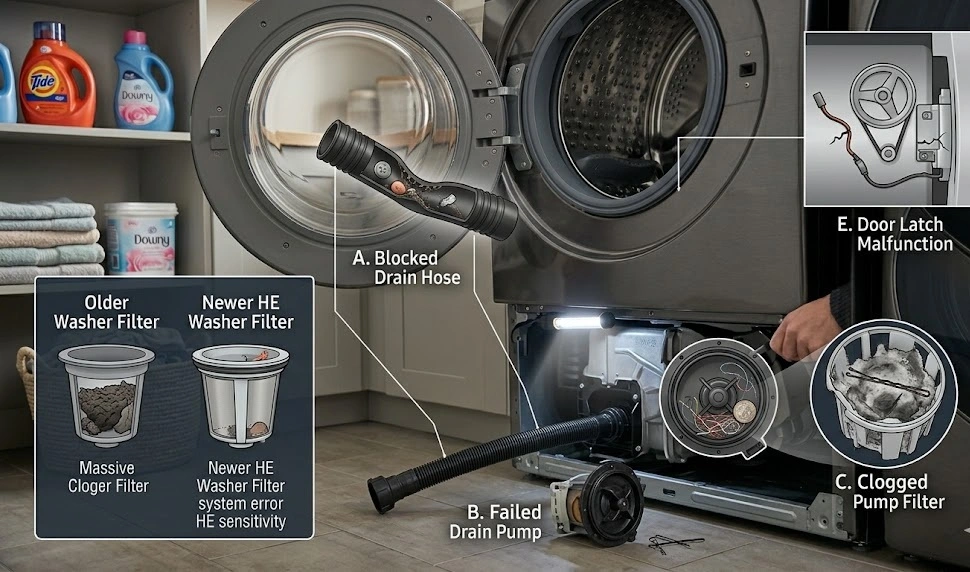
Most drainage problems come down to one thing: water cannot move through the machine the way it is supposed to.
The drainage system in your washer involves several connected parts:
- The drain hose
- The drain pump
- The pump filter
- The spin cycle mechanism
- The lid switch or door latch
When any one of those components fails or gets blocked, water stays trapped inside the drum.
One thing worth knowing about modern washers: they are more sensitive to blockages than older machines. High efficiency washers use less water and energy, but they are also quicker to stop mid-cycle when something interferes with the drainage system. A small kink in the hose or a partially clogged filter that an older machine might push through will often stop a newer washer completely.
A Clogged Drain Hose Is Usually the First Place to Look
If your washer full of water situation appeared suddenly, the drain hose is your first suspect.
The drain hose carries dirty water out of the machine during the spin cycle. Over time, lint, pet hair, fabric fibers, detergent residue, and occasionally small clothing items build up inside and restrict water flow.
Signs your washer drain hose is clogged include:
- Slow draining or water remaining after the cycle ends
- Standing water that does not clear on its own
- Gurgling or bubbling sounds during draining
- A musty or sour odor near the back of the machine
- Water leaking from the back of the washer
A sock, a small cloth, or even compacted lint lodged deep inside the hose can be enough to stop drainage almost entirely. It happens more often than most people expect, especially in households with kids or pets.
Drain Pump Problems Tend to Get Worse the Longer You Wait
The drain pump is responsible for pushing wastewater out of the machine. When the pump becomes blocked or starts to wear out, the washer cannot empty properly.
Common signs of a drain pump issue include:
- Humming or buzzing noises when the machine tries to drain
- The washer stopping mid-cycle before finishing
- Water remaining in the drum after washing
- Draining that works sometimes but not consistently
Here is something a lot of DIY guides skip over: the pump is not always broken in the mechanical sense. Coins, hair clips, small buttons, and compacted lint can jam the impeller blades inside the pump housing without causing any actual damage. Clearing that blockage costs far less than replacing the pump outright.
If a clogged pump gets ignored long enough, it can overheat. At that point you are looking at a more involved repair.
Why Is My Washing Machine Not Draining But Still Spinning?
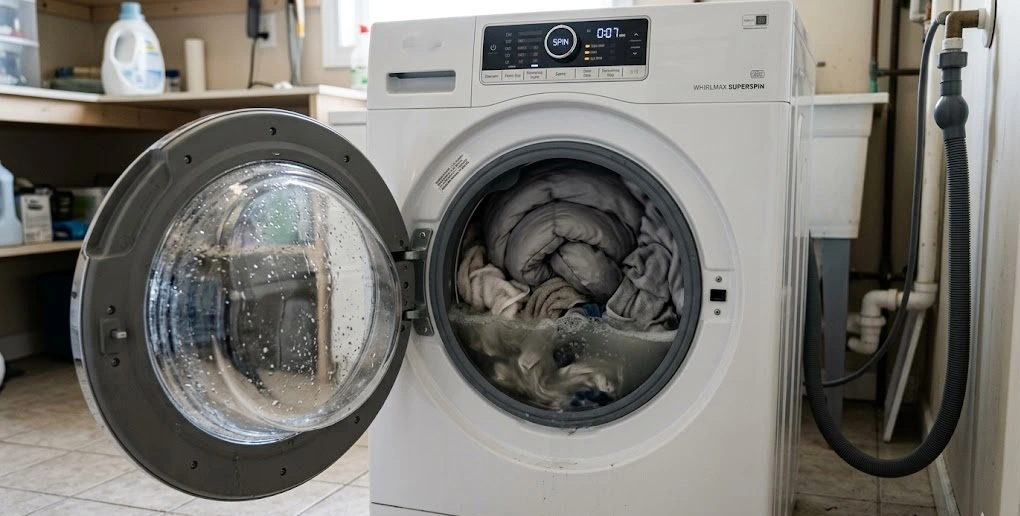
This one confuses a lot of people because it seems contradictory.
If your washing machine is not draining but spinning, the drum is rotating while water is still getting trapped inside. That usually happens because of a partial blockage rather than a complete failure. The machine has enough function to spin but not enough drainage capacity to push water through properly.
Common causes include:
- A restricted drain hose that allows some water to pass but not all of it
- A partially clogged filter slowing the drainage flow
- An overloaded drum causing the machine to cut the drain cycle short
- A weak drain pump that is running but losing pressure
Overloading is especially common with bulky laundry like comforters, heavy blankets, or thick towels. Modern washers detect weight distribution and may shorten or stop the drain cycle when the load sits unevenly. Older machines would just shake through it.
What a Dirty Pump Filter Actually Does to Your Washer
The pump filter is one of those maintenance items that gets overlooked for years because it is not obvious and the machine keeps working anyway. Until it does not.
Pump filters collect:
- Lint and hair
- Coins and small debris
- Paper fragments
- Fabric fibers
- Buttons and clips
As the filter fills up, it restricts water flow and creates pressure inside the drainage system. That pressure has to go somewhere, which is why a neglected filter often shows up as washer leaking water, wet clothes after a full spin cycle, or a persistent bad smell even in a machine that gets cleaned regularly.
A common mistake is cleaning the drum and running washer cleaning tablets while never touching the filter. The drum can look spotless while the filter is completely packed.
How to Fix a Clogged Washer at Home
Some drainage problems are genuinely fixable without calling anyone. Here is how to work through the most common ones safely.
Unplug the washer before doing anything. Water and live electricity near each other is not a situation worth rushing.
Step 1: Check the Drain Hose
Pull the washer away from the wall enough to see the hose at the back.
Look for:
- Kinks or sharp bends in the hose
- Areas where the hose is pinched against the wall or cabinet
- Visible debris near the connection points
A hose that is bent at a tight angle can restrict water flow just as effectively as a physical blockage. Straightening it out sometimes solves the problem entirely.
Step 2: Clean the Pump Filter
Most front-load washers have a small access panel near the bottom front of the machine. Top-loaders may require accessing the pump from inside or underneath.
Lay towels down before opening the filter. More water comes out than most people anticipate.
Remove lint, coins, debris, and anything else that has collected there. Rinse the filter under running water before replacing it.
For a visual step by step guide on locating and cleaning your specific washer model’s filter, Whirlpool’s official maintenance guide covers most common front load and top load models in detail.
Step 3: Check Your Detergent Amount
Too much detergent creates a residue that builds up inside hoses, filters, and the pump housing over time. High efficiency washers are especially sensitive to this.
If you have been using a full cap of standard detergent in an HE machine, that is likely contributing to a slow buildup of drainage sludge.
Step 4: Try a Washer Reset
Sometimes the control board just needs a fresh start.
Unplug the machine, wait five full minutes, then plug it back in and restart the cycle. It is a simple step but occasionally clears a stuck cycle without any additional intervention.
Prevention: Habits That Keep Drainage Problems from Starting
Routine maintenance goes a long way in households that run multiple loads each week.
Clean the filter every one to three months. Even a quick rinse prevents the kind of buildup that causes slow drainage and bad odors.
Do not overload the drum. Heavy loads stress both the motor and the drainage system. If the drum feels packed before you close the door, split the load in two.
Check pockets before loading. Coins, pens, and small objects are among the most common causes of drain pump damage.
Use the correct detergent for your machine. High efficiency washers need HE-labeled detergent specifically. Regular soap creates far too many suds for the drainage system to handle.
Inspect hoses seasonally. A small kink that looks minor can worsen over time as the hose ages and stiffens.
When to Call a Professional
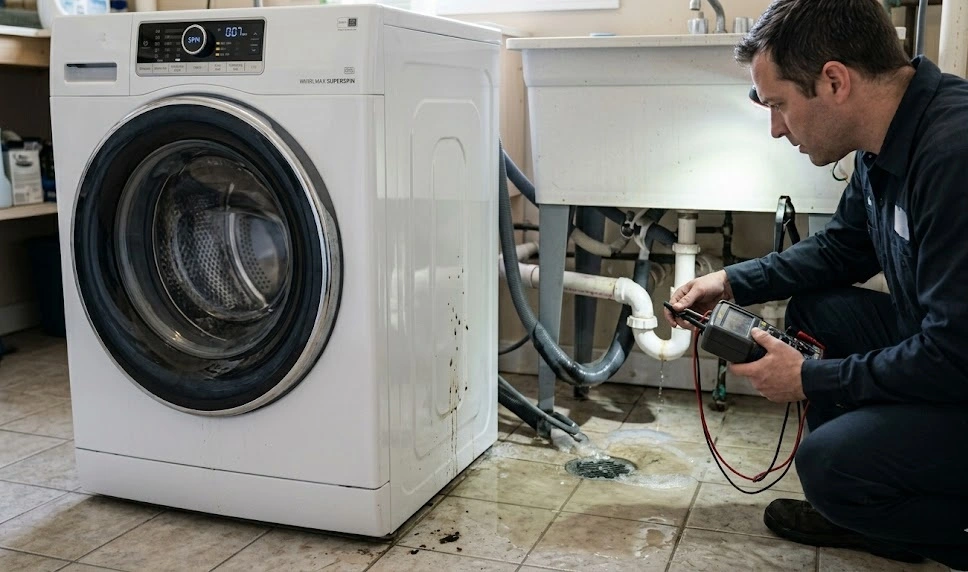
Some drainage problems go deeper than a blocked hose or a dirty filter.
Call a technician if you notice:
- Drainage failures that keep coming back after you have already cleaned the filter and hose
- Burning smells during or after a cycle
- Loud grinding or banging sounds when the machine tries to drain
- Water leaking from multiple areas at the same time
- Water backing up into nearby drains or floor drains
- Standing water after every single cycle regardless of load size
Electrical faults, worn motor components, a failed drain pump, and damaged control boards all require proper diagnosis. Attempting to push a machine through these failures can turn a repair into a replacement.
For recurring washer drainage problems, a trusted appliance repair service in Albany can identify what is actually failing before the damage spreads to other components. A professional washer repair technician can assess the drain pump, pressure switches, motor assembly, and electronic controls in ways that basic troubleshooting cannot.
If you have run through the steps above and the machine still will not drain, this is the point where getting a professional set of eyes on it saves money compared to waiting.
Frequently Asked Questions
Why is my washer full of water after the cycle ends?
Water remaining in the drum after a complete cycle means something is blocking it from draining. The most common causes are a clogged drain hose, a packed pump filter, or a drain pump that is failing or jammed with debris.
Can a clogged washer cause water to leak?
Yes. When drainage is restricted, pressure builds up inside the hoses and around seals. That pressure can force water out through weak points, which is why drainage problems and leaks often appear together.
Why does my washer spin but not drain?
A partial blockage in the hose or filter allows the drum to rotate while preventing water from fully evacuating the machine. A drain pump that is running but losing efficiency can also cause this pattern.
Should I repair or replace my washing machine?
For most washers under eight to ten years old, repair is the more cost-effective choice unless the motor or control board has failed completely. Drain-related repairs are generally among the less expensive fixes in appliance repair.
How often should the pump filter be cleaned?
Most appliance technicians recommend checking and cleaning the filter every one to three months. Households with pets, children, or heavy laundry volume should lean toward the monthly end.
Can too much detergent cause draining problems?
Over time, yes. Excess detergent leaves a residue that gradually clogs hoses, coats filter screens, and creates sludge around pump components. Switching to the correct detergent type and amount often improves drainage noticeably within a few cycles.
Wrapping Up
A washing machine not draining feels like a crisis, especially when it happens on a weeknight with a pile of wet laundry and nowhere to put it.
The good news is that most drainage problems start small and stay manageable if you catch them early. A packed filter. A kinked hose. Months of excess detergent quietly building up inside the system.
The key is not ignoring the early signs: slow draining, faint odors, clothes coming out wetter than usual. Those are the warnings that give you time to fix things cheaply before a simple clog becomes a failed pump.
Check the basics first. If the problem keeps coming back, or if the machine is showing electrical or mechanical symptoms alongside the drainage failure, that is when professional help pays for itself. For homeowners who want to go deeper on washer maintenance and drainage care, Falcon Appliance Services has practical guidance worth reading before things get worse.


